what is the best way to store sliced bread purchased from a store
This may seem like a mundane mail service to some, but it's actually i of the most common questions I receive: what is the best mode to store bread after blistering it? And really, it makes sense: we spend considerable fourth dimension fussing almost with our sourdough starter, preparing a levain, mixing dough and tending to it for hours—and finally, all our piece of work culminates in the oven. But after baking (and eating) there'southward still the task of storing the bread, to try and proceed it as fresh equally possible for as long as possible.
1 of the beautiful things about sourdough bread is it will terminal longer before staling and molding than a commercially yeasted bread1.
The acidification of the dough by lactic acid bacteria in our sourdough starter and other physical-chemical changes during the breadmaking procedure help protect confronting premature bread firming and drying. Additionally, these acids also help forbid molding, and in my experience (and besides that of the WSU Breadstuff Lab), normally go along a loaf perfectly edible for a week or more than—all without whatsoever chemical preservatives.
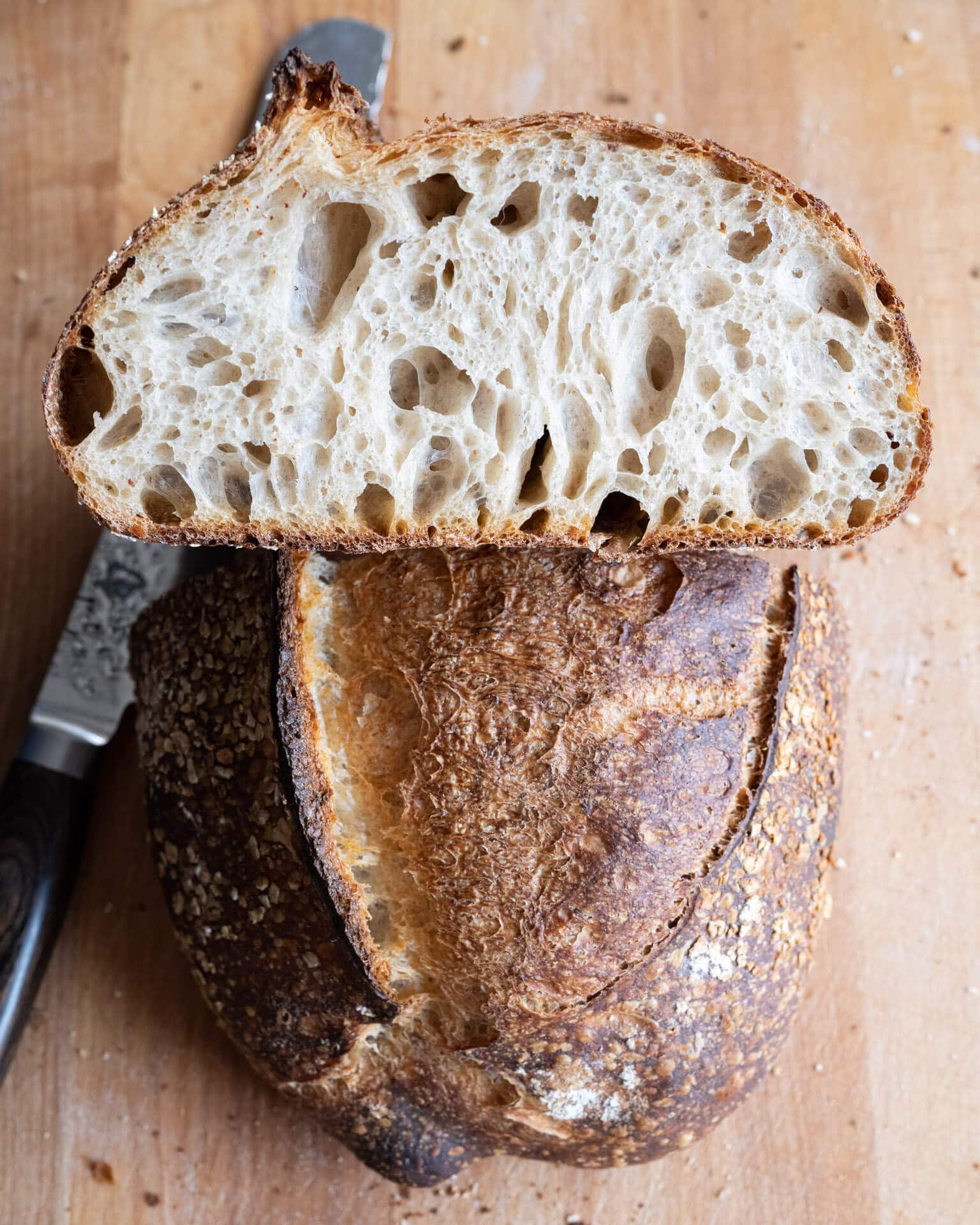
The Science: from baking to staling
Before we get into solutions for the all-time manner to store breadstuff, we should first briefly talk virtually stale staff of life: no one'south favorite, unless nosotros're making French toast, ribollita, bruschetta, or bread crumbs and croutons, of course. But what happens behind the scenes when the dough is baked, left to cool, and on its way to staleness?
If you're not interested in a brief scientific basis for staling, skip to the next section.
As bread dough is baking, the starch granules (which wheat flour is primarily composed of) gelatinize. When they gelatinize, they smashing from the wet in the dough, and their rigid, crystalline structure transforms into a non-crystalline (baggy) form (very similar to what happens when you make a tangzhong or yudane). When the baked loaf is removed from the oven, it begins to cool. From this bespeak on, the crust and nibble brainstorm to harden over time every bit starch (and near significantly, amylopectin2) undergo retrogradation, a re-ordering into a crystalline course.
This retrogradation ways a hardening of the nibble every bit moisture moves out from the starches, eventually taking a loaf of bread from soft and pliable to excessively hard and what we place as stale. Other processes begin to take effect with the crust as well, as it begins drawing moisture out from the nibble into itself, making the chaff rugged and leathery.
In full general, staling can exist reversed somewhat by reheating the bread to sufficient temperature (140°F / 60°C) simply it can't completely reverse the furnishings of staling, and the results from heating will just last a curt time. Y'all can see this directly in your kitchen: reheat a piece of dried bread in the oven or toaster and you'll think you almost take a slice of fresh-baked bread on your plate—for a few minutes at to the lowest degree.
It'southward also worth knowing that doughs containing some percentage of fats (lipids) will typically concluding longer before staling. The fat present in the dough slows the re-crystallization of the starch granules and reduces the movement of moisture between starches and proteins (de-gelatinization)3 which causes the crumb to harden.
Staling vs. drying
Note that staling and drying are distinctly different processes at piece of work. Staling can outcome in a business firm, hard loaf of bread merely is not necessarily due to the evaporation or loss of water from the crumb and crust, information technology'southward more virtually the retrogradation procedure described above. However, drying can also occur and can especially exist a problem in arid climates (like where I live in New United mexican states).
To avoid excessive drying, information technology's important to brand sure bread is stored properly (cut-side-down, using a breadbox, etc.—more than on this soon, I promise) then it doesn't prematurely dry to a bone.
Ok, enough science. Then how do we put this into practise?
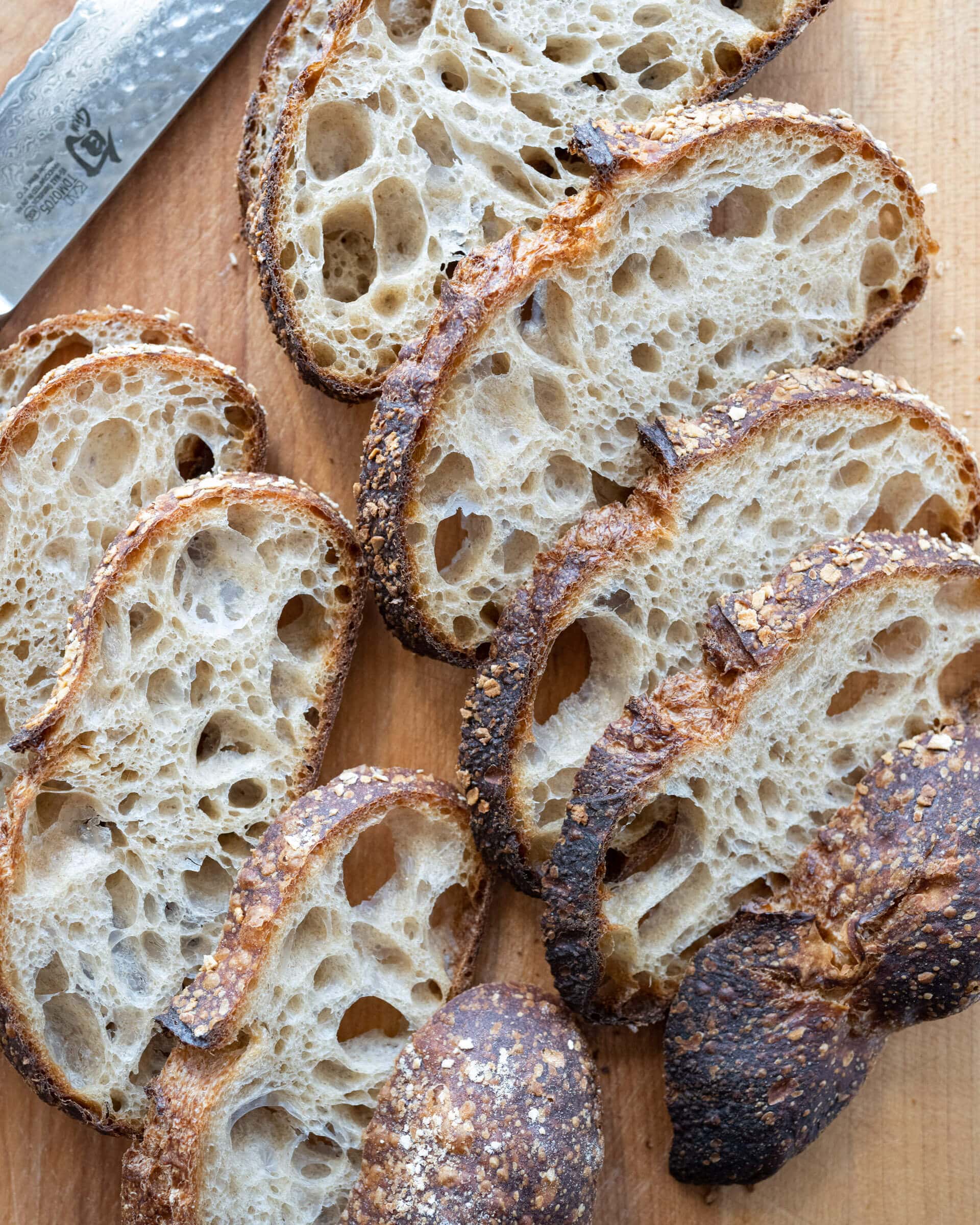
The Practice: Keep Staff of life Fresh Longer
The following steps are loosely how I accept a loaf of my broiled breadstuff from the oven, to cooling, to cut, to long term storage.
Look to slice staff of life after blistering
Cut fresh-baked breadstuff as well early will upshot in a gummy and sticky interior.
First and foremost, it's always best to allow fresh bread rest until it's cool and fully set before slicing. I know, fresh-from-the-oven is hard to resist, but your bread will non but gustation improve it will keep longer if y'all wait to cutting it for at least an hour—I actually prefer two or more than.
The reason goes back to the science behind all of this: starch retrogradation is happening correct as the loaf is pulled from the oven, merely it hasn't progressed far plenty to firm upward and gear up the interior appropriately. Considering of this, slicing a warm loaf of bread too early will effect in a mucilaginous and sticky interior.
Further, recipes containing a high percentage of whole grains, especially a 100% whole grain loaf (which are typically highly hydrated), or loaves that are larger (like my 1.5 kg miche), benefit from an even longer rest. In fact, with these types of breads I find their flavor improves 2-3 days after baking.
With rye bread, especially when rye is in a high percentage, it's common to let the bread remainder, wrapped in baker'south linen or a towel, for one or two days before cutting.
Later the baked loaf is cooled and fully fix, then information technology's fourth dimension to cut.
Store staff of life cut-side downward
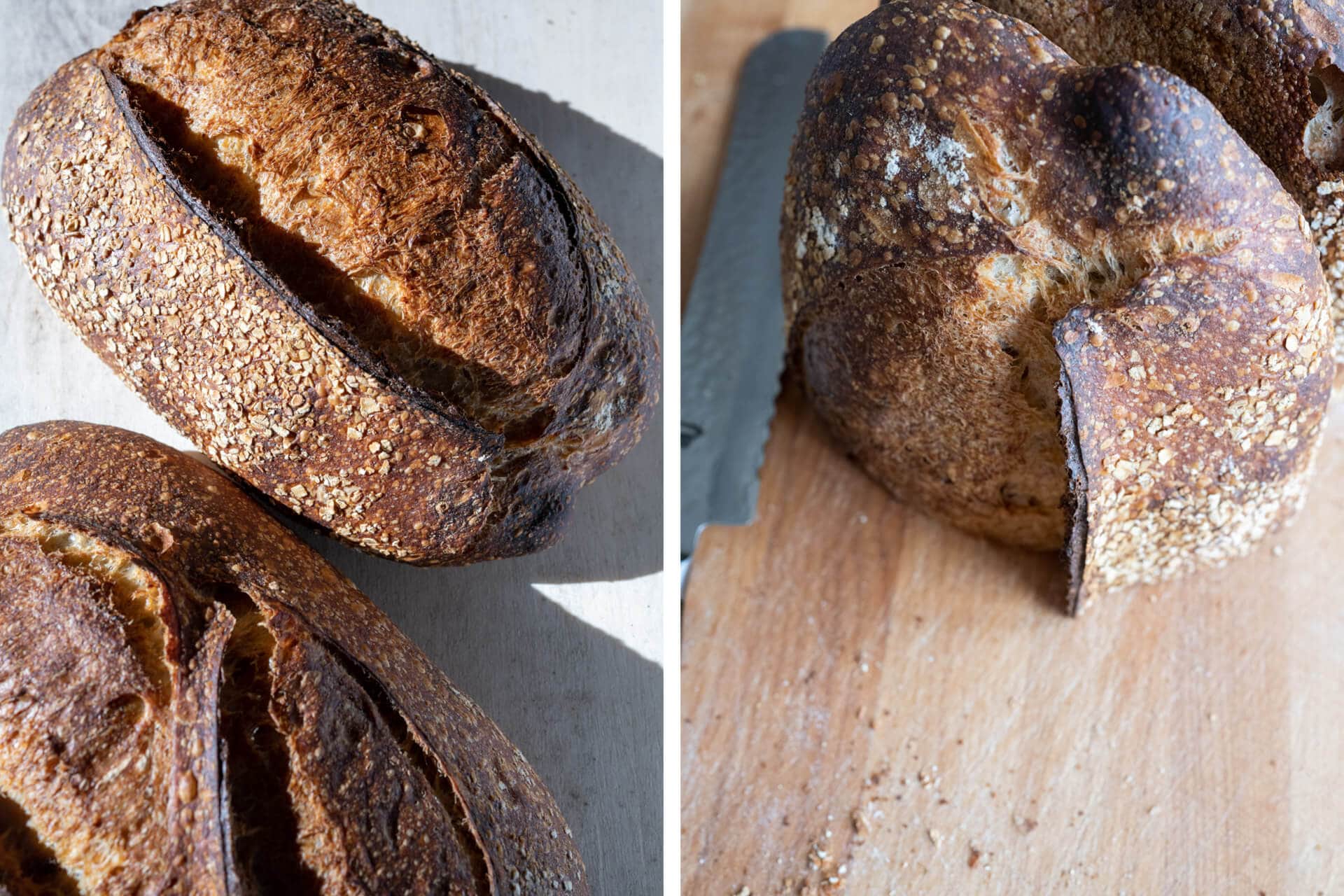
Once cool, I beginning cut the loaf direct downward the middle creating two halves (as seen above, right). This way afterwards slicing from the middle I can turn the halves so the nibble is facing the cutting lath. This completely surrounds the interior by the (relatively) thick crust, keeping it from drying out excessively. The chaff is a natural purse of sorts, keeping wet in and dryness out.
I can typically keep my bread like this for a 24-hour interval or 2 (think, information technology'southward very dry here) on my cutting lath, at which signal I movement information technology to a breadbox.
Use a breadbox
This is every bit simple as it gets: just continue your cooled loaves, cut or uncut, in a bread box, and allow the box do its job. I've had a few different boxes over the years, and when my favorite Wesco German-made box broke (thank my kids for that i) I replaced it with the svelte stainless steel breadbox (seen below) and information technology works just equally well if not amend.
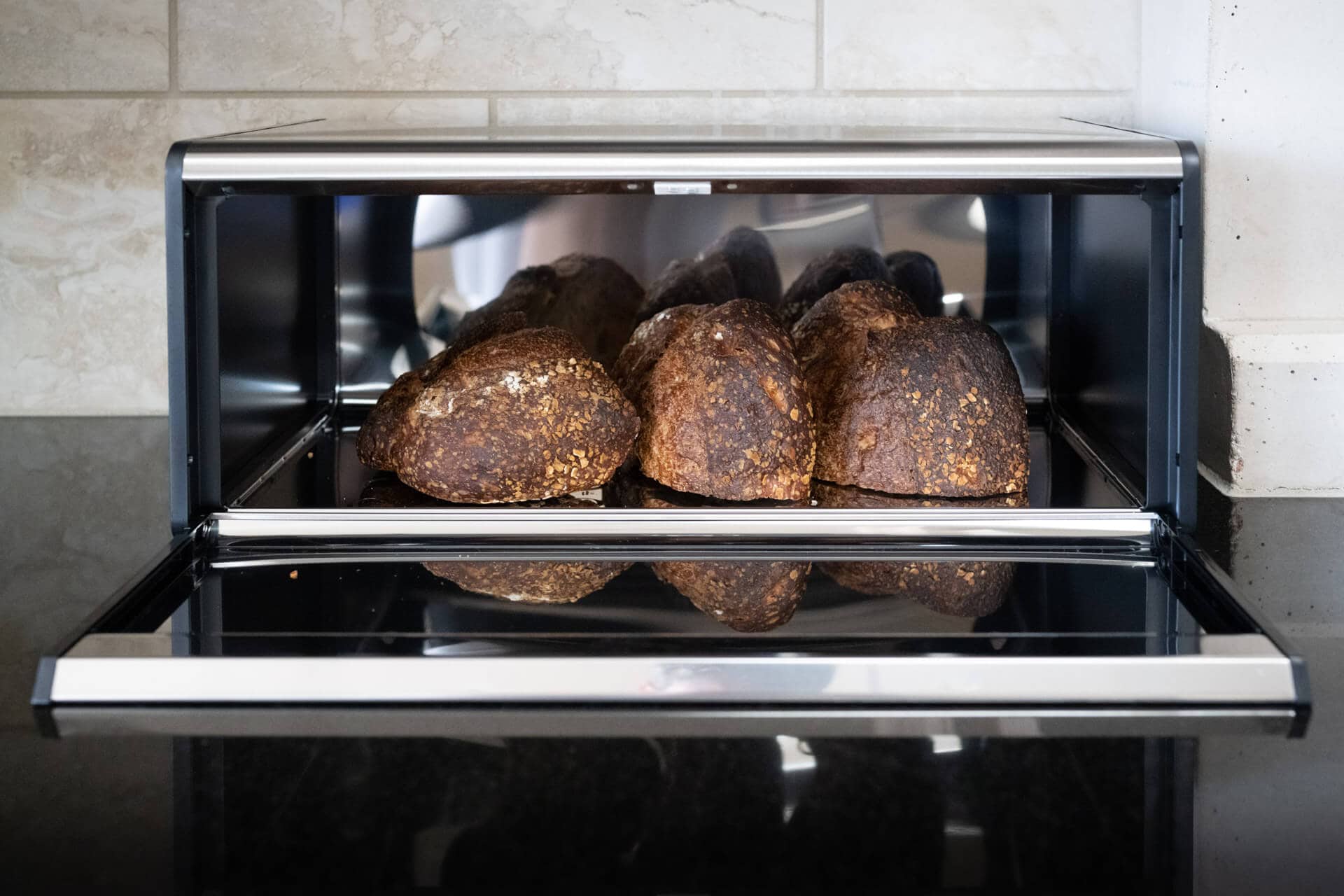
I like that it's rather large (H: 7.three″ x W: xviii.ii″ x D: 9.eight″), and I can easily store 2-3 whole loaves of breadstuff in in that location at a time. And because I bake so often hither at habitation, I almost always take at least 1 loaf of bread in the box, set to exist sliced and used straightaway.
Use reusable wrap like Bee'south Wrap
Another option is to use a reusable wrap like this bread-sized Bee's Wrap. This is i of my favorite ways to wrap up longer loaves (like demi-baguettes) and the wrap works extremely well at keeping loaves soft but not too soft.
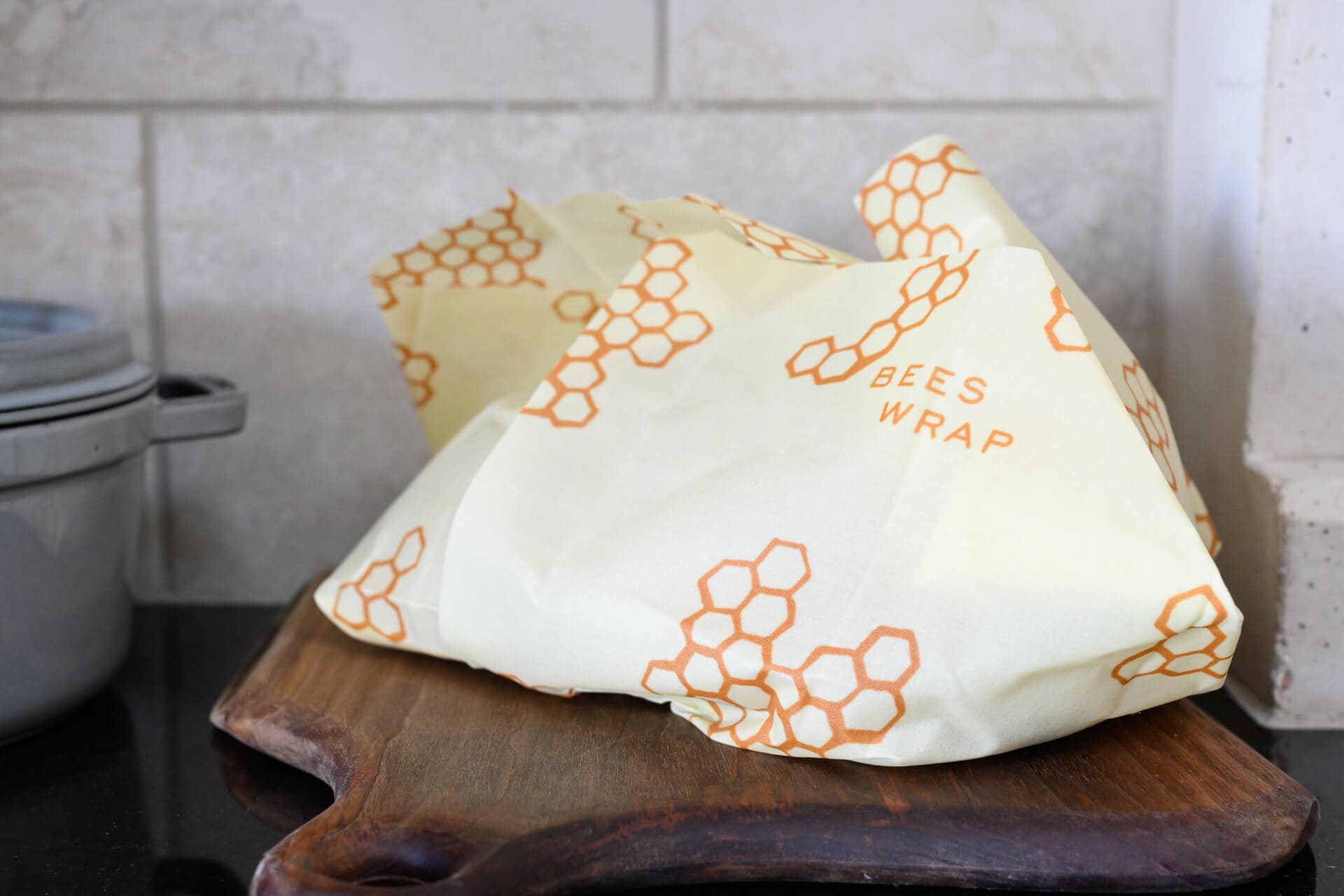
But place your bread in the wrap and comprehend tightly. The beeswax lined wrap will deform and wrap effectually all the nooks and crannies of your loaf as the warmth of your easily mold it to fit.
Paper bags, kitchen towels, and plastic bags
Plain paper numberless and kitchen towels also work very well to keep staff of life from excessively drying. And while many sources say never use a plastic handbag, sometimes it might be necessary, especially if your climate demands information technology so. In the dead of winter here in New United mexican states, humidity levels drop so low my lower hydration sourdough bread about has to exist placed in a sealed plastic bag to retain some semblance of a soft texture. In this rare case, a sealed plastic bag is necessary and works well.
Don't place bread in the refrigerator
Finally, and this is a very important one, don't store bread in the refrigerator. It might seem counterintuitive since the refrigerator is seen as a food-preserver, but placing your homebaked loaf of staff of life in the refrigerator will actually crusade it to stale faster than if information technology'south kept at room temperature.
The Practice: Freeze breadstuff for Long Storage
For long term storage, a freezer is a handy option. By subjecting bread to very low temperatures the retrogradation procedure can be by and large halted, preventing the migration of moisture out of starches and their subsequent recrystallization. This means a cooled loaf can be frozen whole or sliced completely and then the slices are frozen independently (my preference).
Commencement, permit's expect at freezing slices.
Freezing Slices
In exercise, freezing individual slices of breadstuff is a bully way to get the all-time of both worlds: conveniently sliced staff of life that can be reheated at a moment's discover that also keeps for a very long time in the freezer (I've done a calendar month or so, merely this could probably get longer). When reheated, the bread comes out like freshly baked staff of life that's perfectly toasted.
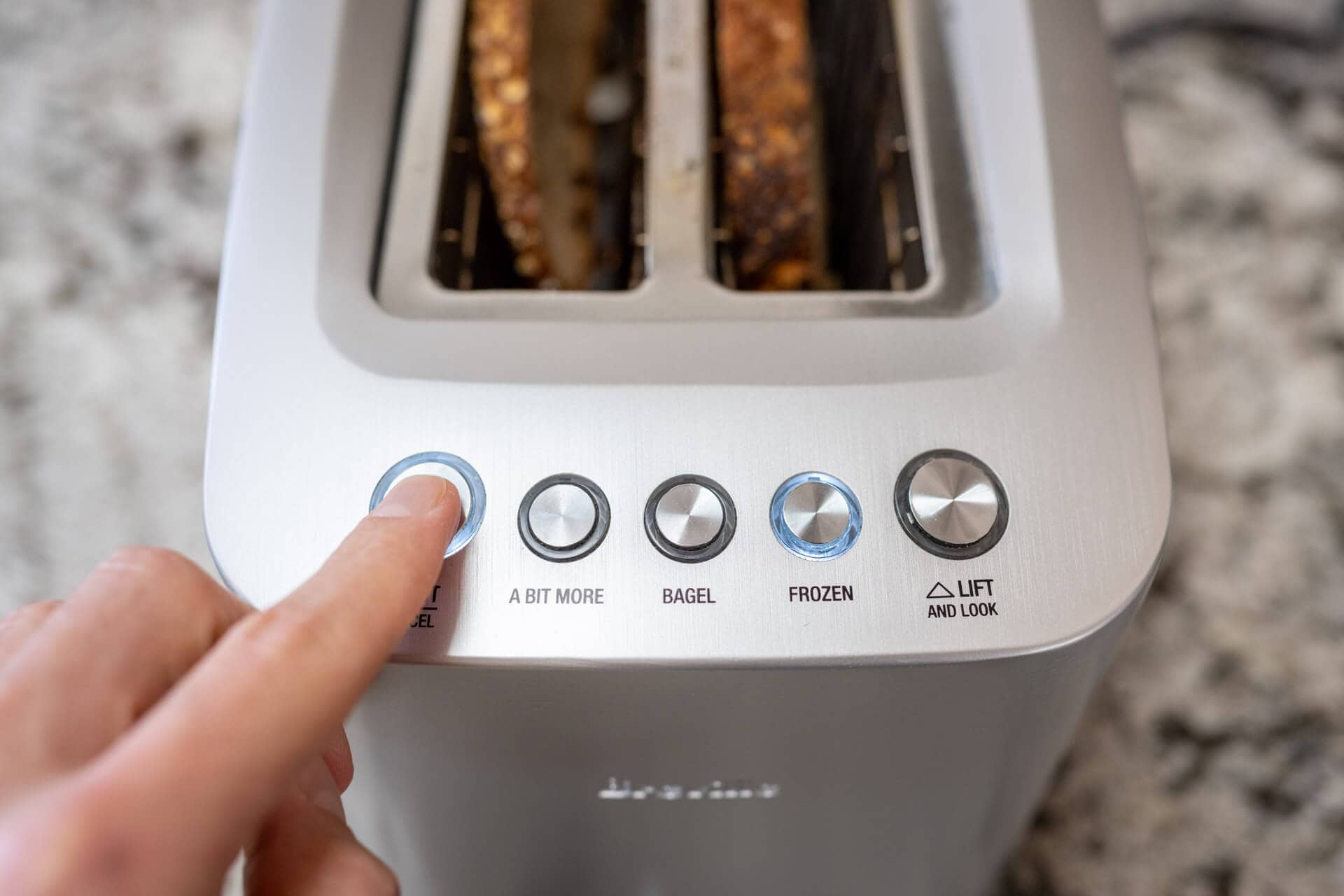
Years ago when I kickoff started baking bread I was on the search for the perfect toaster. After going through a few, I found the Breville Smart Toaster which is the best toaster I've institute: not simply does it take actress long slices (like the ones from sourdough boules or batards) but it has a frozen function that works perfectly to reheat a frozen slice of bread to just the correct amount. It's expensive for a toaster, but the amount of bread I become through here in my kitchen easily justifies the expense.
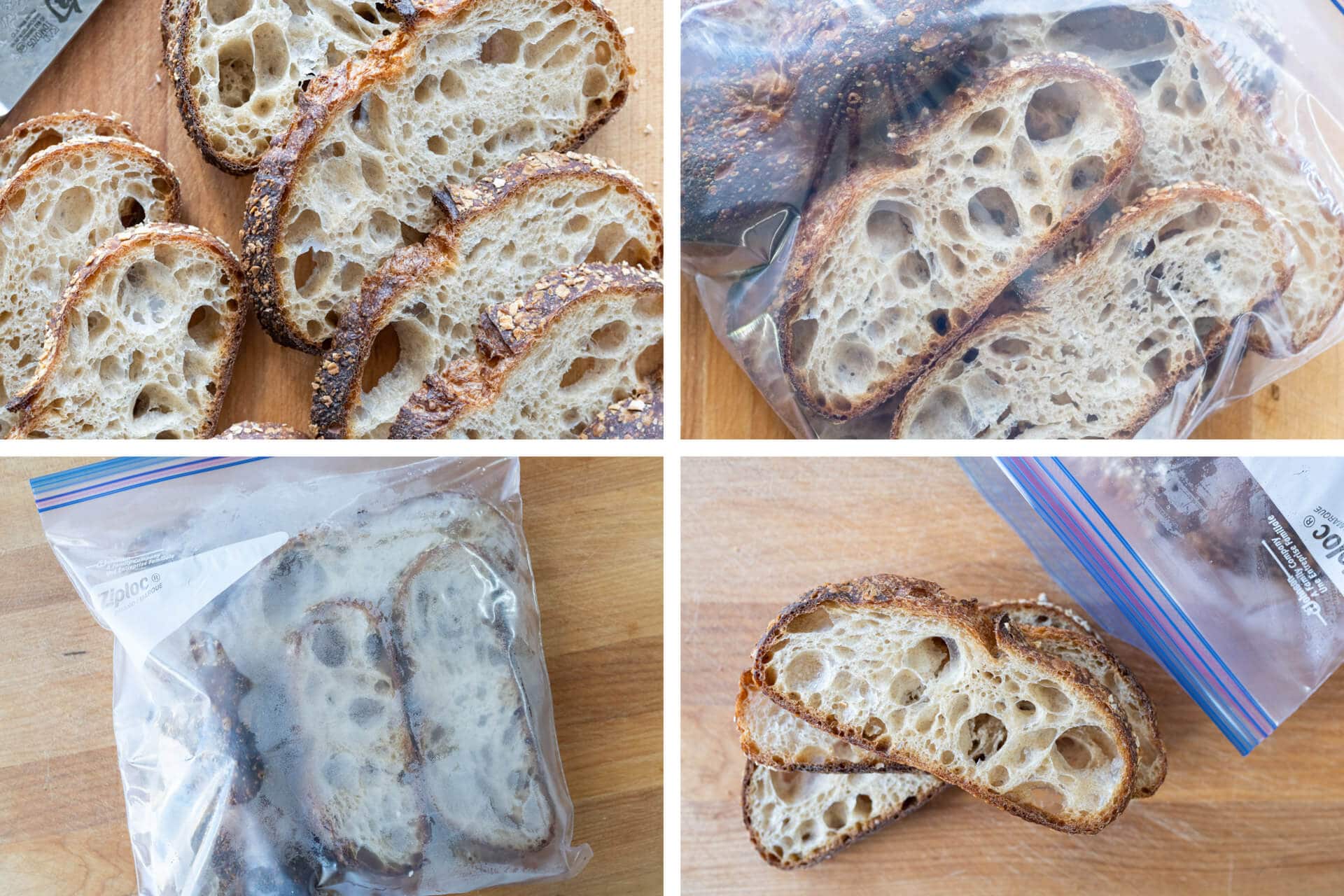
The process is elementary: once your loaf of breadstuff is cooled thoroughly, slice it completely from stop-to-end. Then identify the pieces in a freezer Ziploc pocketbook, one on top of the other, in an alternate pattern (place a layer on the bottom from side to side, then identify slices on top of the lesser layer turned 90°) and press out as much air equally possible. Then, place the bag in the freezer until the slices are fully frozen. At this point, take one or two slices out and reheat them in the toaster to your liking. The plastic freezer bag can be used many times without discarding.
Freezing Whole Loaves
This method uses a footling more material to make piece of work, just it's a great option if yous know you'll want an unabridged loaf of staff of life for some utilise in the future. A skilful example might exist if you bake two loaves at one fourth dimension, program to eat 1 this coming week, merely desire the 2d loaf for the week or ii later.
Once the broiled bread is fully cool, wrap information technology completely in plastic wrap. Then, take the wrapped loaf and put it into a freezer Ziplock bag. Press out every bit much air as possible, and then stick the pocketbook in the freezer. When you want to eat the breadstuff, take information technology out to defrost in the fridge for a few days or on the counter overnight. Once it thaws completely, store it on the counter via 1 of the methods described higher up.
What Adjacent?
I'd beloved to hear if you accept your own best way to shop bread and keep your sourdough fresh. I know here in my kitchen, with the various options for storing and using bread, in that location's hardly ever a loaf wasted—and I broil a lot of bread!
For other practical baking guides, see how to store a sourdough starter (for short and long term), and my guide to how to shop flour to go along it fresh.
If you're looking for a recipe to get started baking sourdough (and freezing!), bank check out my latest simple weekday sourdough breadstuff—a delicious staff of life that couldn't be easier.
Happy baking!
Source: https://www.theperfectloaf.com/the-best-way-to-store-bread/

Post a Comment for "what is the best way to store sliced bread purchased from a store"